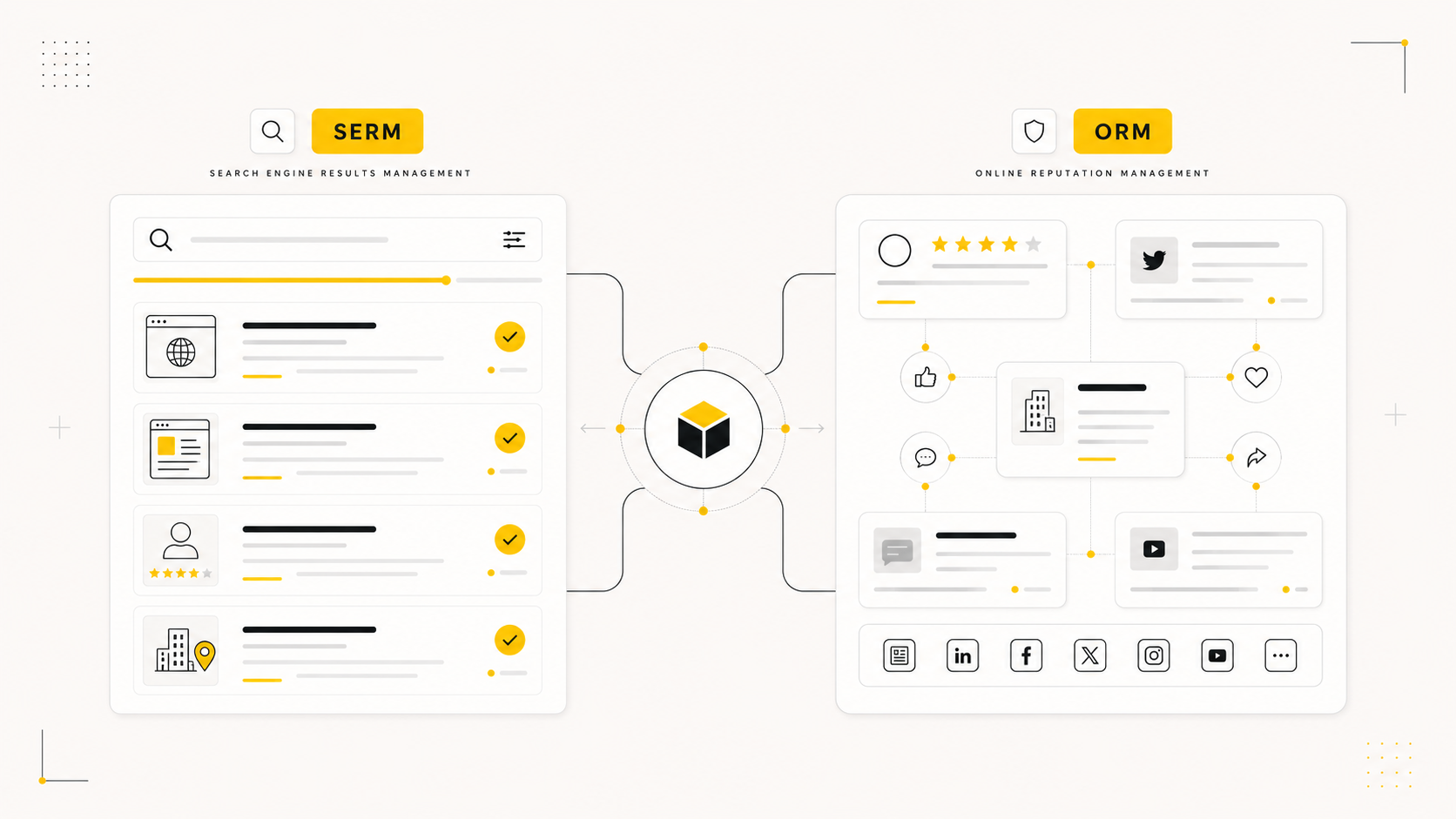
SERM and ORM are often used as if they describe the same service. They are connected, but they focus on different parts of the reputation environment.
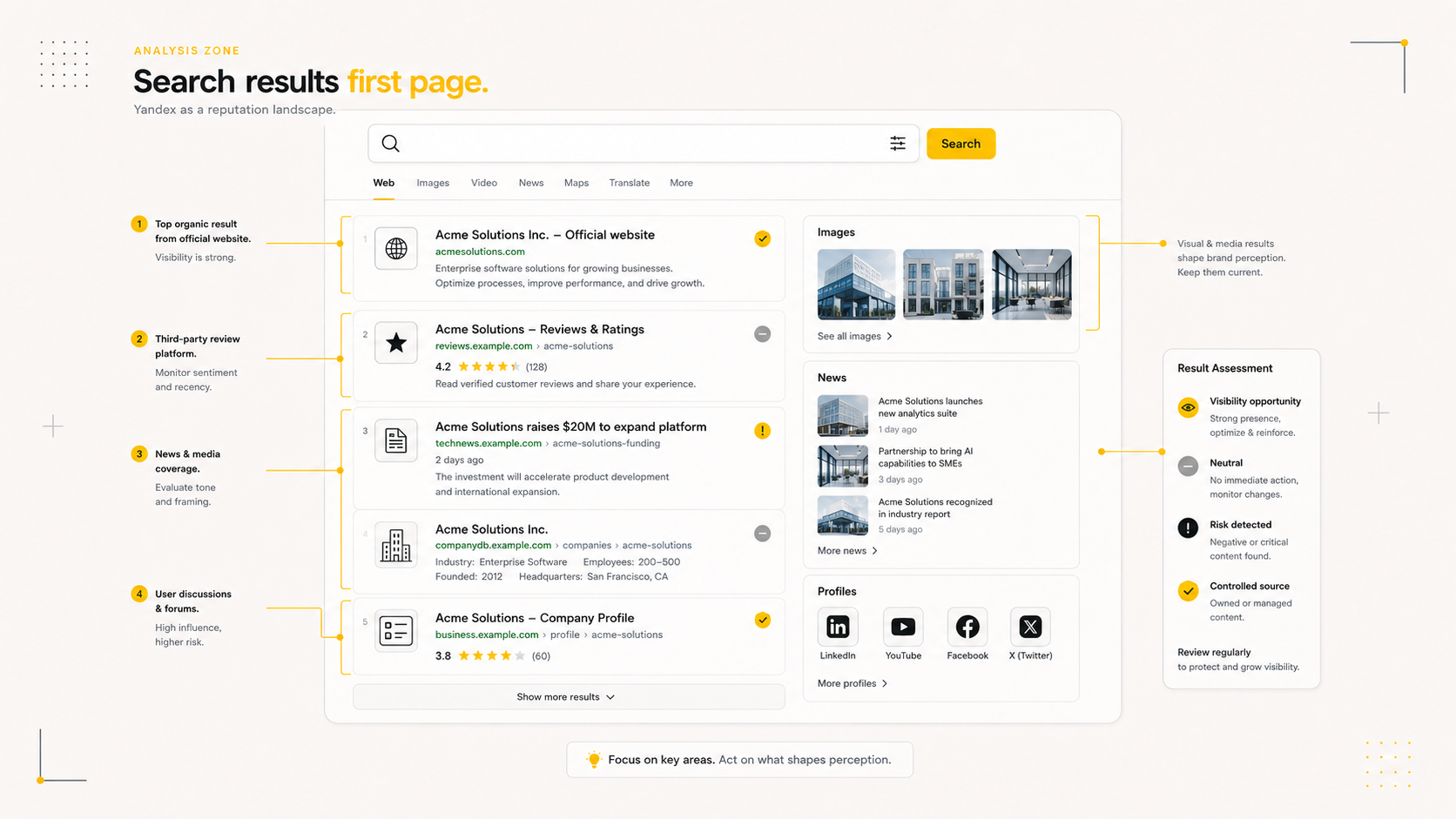
SERM stands for Search Engine Reputation Management. It focuses on what people see in search results when they look for a company, brand, executive or expert.
ORM stands for Online Reputation Management. It is a broader discipline that can include search results, reviews, ratings, social media, media publications, forums, public discussions and other digital sources.
What SERM Covers
A SERM project begins with search queries.
For a company, these may include:
- company or brand name;
- company name plus reviews;
- company name plus rating;
- company name plus complaints;
- company name plus products or services;
- names of founders or executives;
- sensitive queries connected to disputes or public events.
The objective is to understand the first impression created by Google and Yandex and to manage the sources that form that impression.
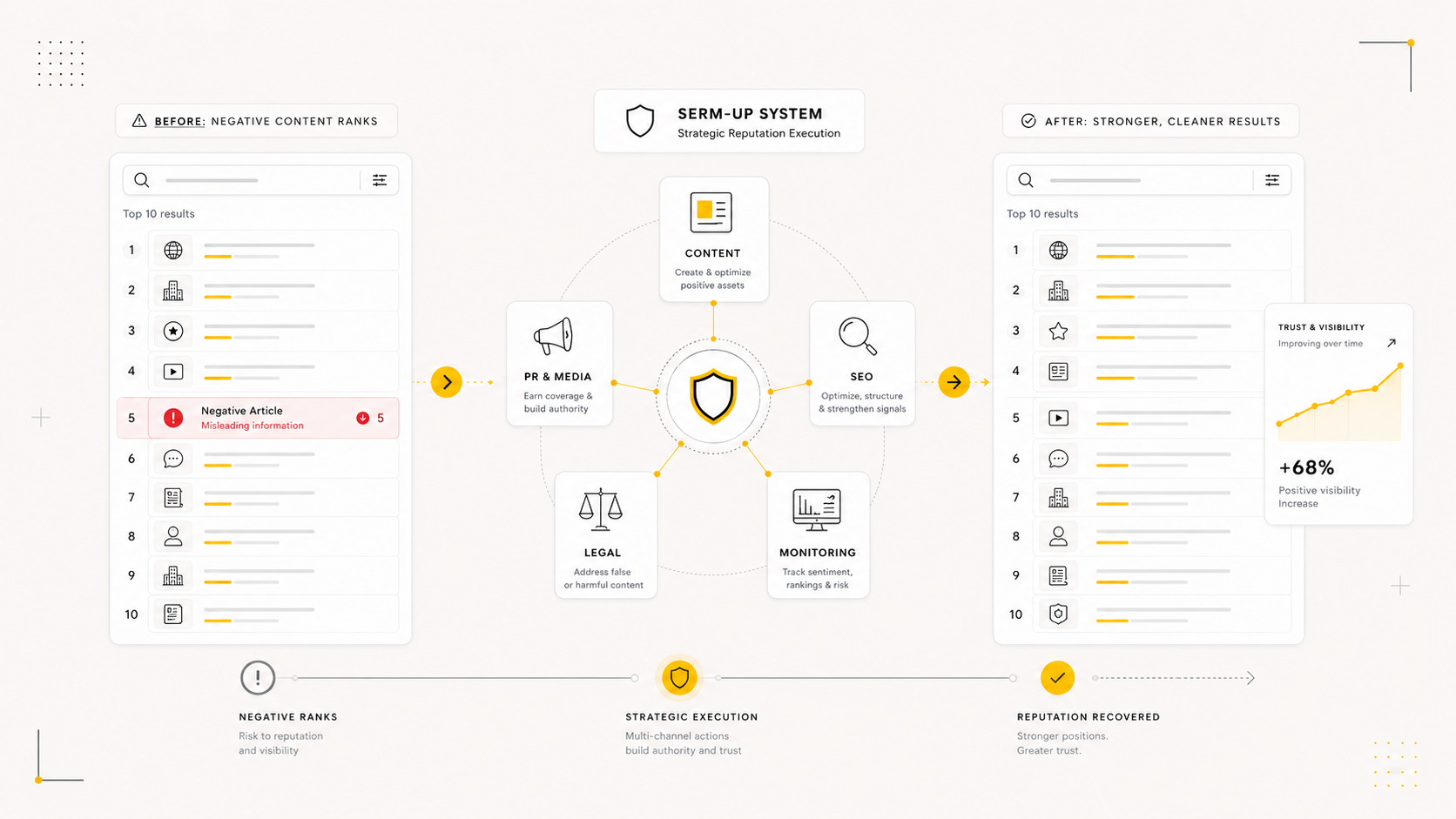
Depending on the situation, SERM may include:
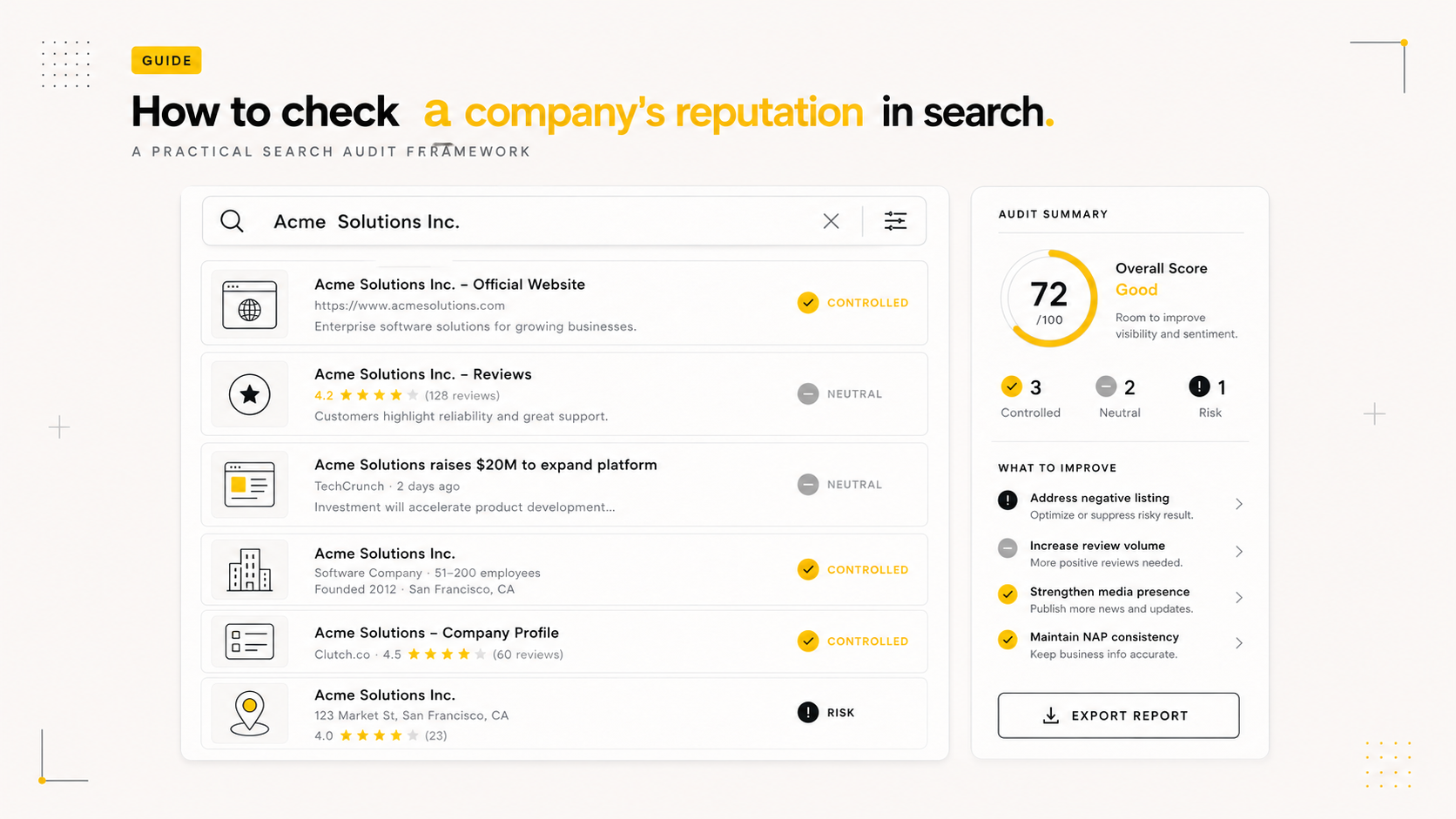
- Search reputation audit. Analysis of queries, positions, domains, source types, sentiment and visible negative URLs.
- Risk prioritisation. Evaluation of which sources have the greatest impact because of position, query coverage, credibility or content.
- Platform work. Assessment of correction, moderation or removal options when a source may violate rules or contain inaccurate information.
- Controlled source development. Improvement of official websites, company profiles, executive pages, biographies and other owned assets.
- Content and publication work. Preparation of useful, verifiable materials for relevant sources.
- SEO support. Work with indexation, relevance, internal linking and search visibility.
- Monitoring. Tracking changes in the top 10 and top 20 and the appearance of new reputation signals.
What ORM Covers
ORM looks beyond search.
An ORM programme may include:
- review platforms;
- map services;
- social media;
- online communities;
- media mentions;
- customer feedback processes;
- employer reputation platforms;
- crisis communication;
- brand and executive monitoring;
- response policies.
Search is still important, but it is one part of a wider reputation system.
The Main Difference
The easiest way to distinguish the two is by the starting question.
SERM asks:
What do people see in Google or Yandex when they search for us?
ORM asks:
What public digital information influences trust in our company or person?
A company may need SERM without a large ORM programme when the main risk is concentrated in search. Another company may have strong search results but serious problems with reviews or public discussions, which requires broader ORM work.
Where SERM and ORM Overlap
The disciplines overlap because many reputation platforms appear in search results.
A review profile, media article, forum discussion or company directory may be both:
- an ORM channel that requires direct management; and
- a SERM source that affects the first page of search.
For example, improving a company profile can strengthen customer trust on the platform and also improve the branded search picture.
When a Business Needs SERM
SERM is especially relevant when:
- negative content appears in the top 10;
- official sources rank below outdated or critical pages;
- the search picture is incomplete or inconsistent;
- an executive's name is connected to a business decision;
- a tender, transaction or public event is approaching;
- different teams do not know which search risks matter most.
When a Business Needs Broader ORM
A wider ORM programme may be needed when:
- ratings are declining across several platforms;
- recurring customer complaints are not being resolved;
- social or community discussions create a sustained risk;
- the company needs a unified response policy;
- employer reputation affects hiring;
- media, reviews and search influence one another.
Can SERM Remove Negative Content?
SERM is not a guaranteed removal service.
A publication or review can only be removed by the publisher, platform or an authorised legal process. A SERM specialist can assess the grounds, prepare a platform request, improve accurate sources and reduce the search impact when the material remains online.
What a Good SERM Project Does Not Use
A professional project should not rely on:
- fake reviews;
- hidden text;
- deceptive websites;
- fabricated experts;
- mass low-quality pages;
- false complaints;
- guaranteed search positions;
- promises to erase any information.
Sustainable reputation work is based on accurate sources, useful content and realistic measurement.
How to Start
The first step is usually a reputation audit.
It shows:
- which queries matter;
- which URLs are visible;
- which materials create real risk;
- which official sources are missing or weak;
- where a correction or platform request may be appropriate;
- whether monitoring, targeted actions or a full strategy is required.
Summary
SERM is the search-focused part of online reputation management. ORM covers the wider digital reputation environment.
A business does not need to choose one abbreviation as a universal solution. It needs to identify where trust is being formed and which sources influence real decisions.