A negative result on the first search page creates urgency, but immediate uncoordinated action can make the situation worse.
The first objective is to understand the real search impact, preserve evidence and select the appropriate workstream.
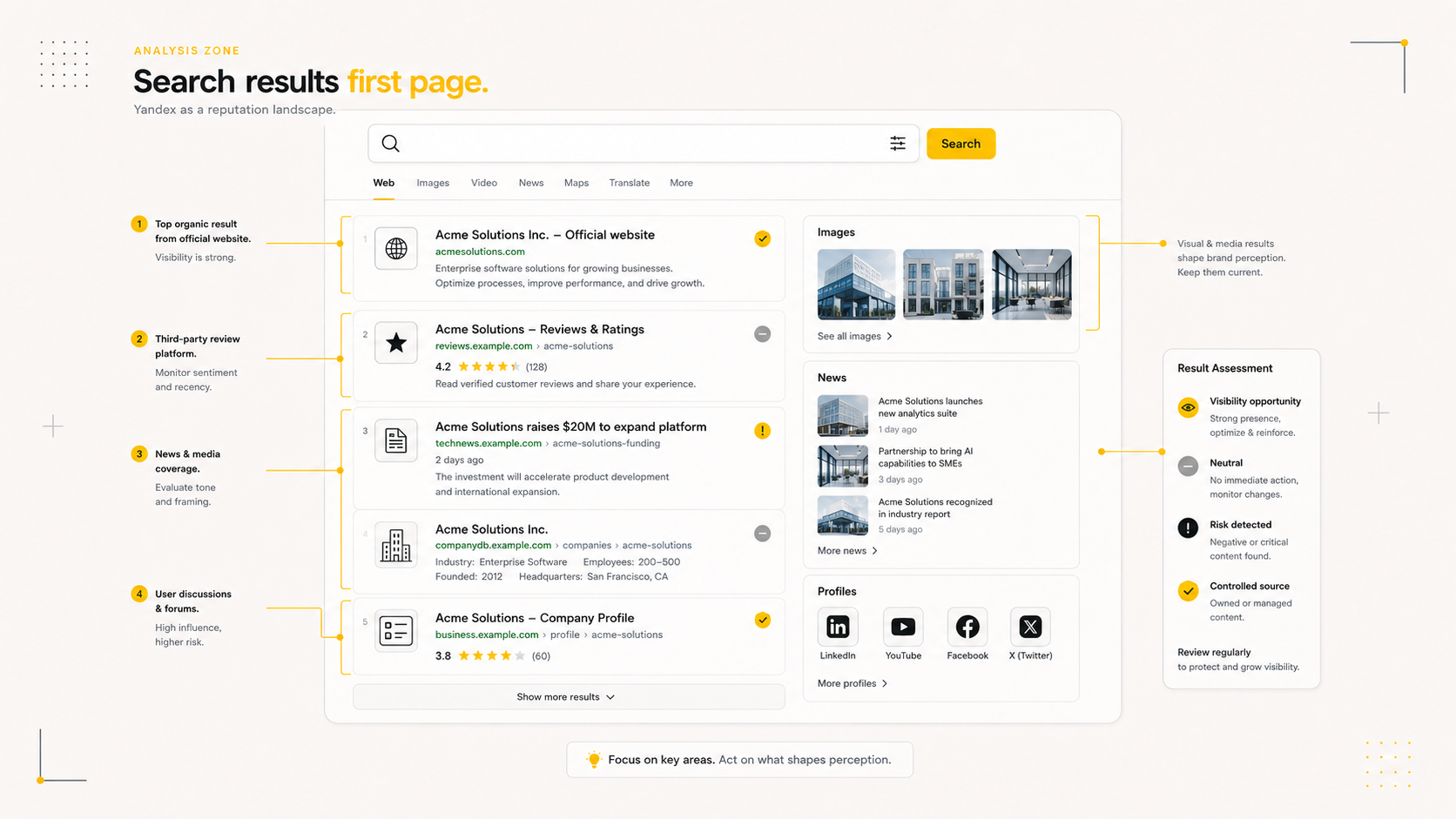
1. Confirm the Visibility
Check:
- the exact query;
- Google and Yandex separately;
- the relevant region;
- desktop and mobile if important;
- the URL position;
- the page title and snippet;
- related queries;
- copies or syndicated versions.
Record the date and take screenshots.
2. Read the Full Material
Do not judge the risk from the title alone.
Identify:
- the factual claims;
- opinions;
- dates;
- sources cited;
- the company or person involved;
- whether the material is current;
- whether the publication has been updated;
- whether comments add additional risk.
3. Assess the Decision Impact
Ask what a client, partner, employer, investor or candidate may conclude.
The same article can create different levels of risk depending on whether the search occurs before:
- a purchase;
- a tender;
- a transaction;
- an appointment;
- an interview;
- an investment;
- a public launch.
4. Do Not Attack the Publisher or Reviewer Immediately
Aggressive public communication may:
- increase attention;
- create new articles or screenshots;
- strengthen the negative page;
- produce additional search queries;
- reduce the chance of a constructive correction.
Communication should be factual and proportionate.
5. Preserve Evidence
Save:
- URLs;
- screenshots;
- publication date;
- author;
- page content;
- comments;
- search positions;
- copies;
- correspondence;
- internal documents relevant to factual accuracy.
Evidence may be needed for a platform request, publisher communication or legal advice.
6. Check Removal or Correction Options
Possible grounds may include:
- factual error;
- outdated company details;
- privacy issues;
- prohibited personal data;
- impersonation;
- platform rule violation;
- duplicate or copied content;
- a publisher correction process.
A critical opinion is not automatically removable.
7. Review Controlled Sources
Check whether the company or person has:
- a current official website;
- complete company profiles;
- an accurate biography;
- relevant service and project pages;
- expert materials;
- current contact information;
- credible third-party references.
Weak controlled sources make one negative result more influential.
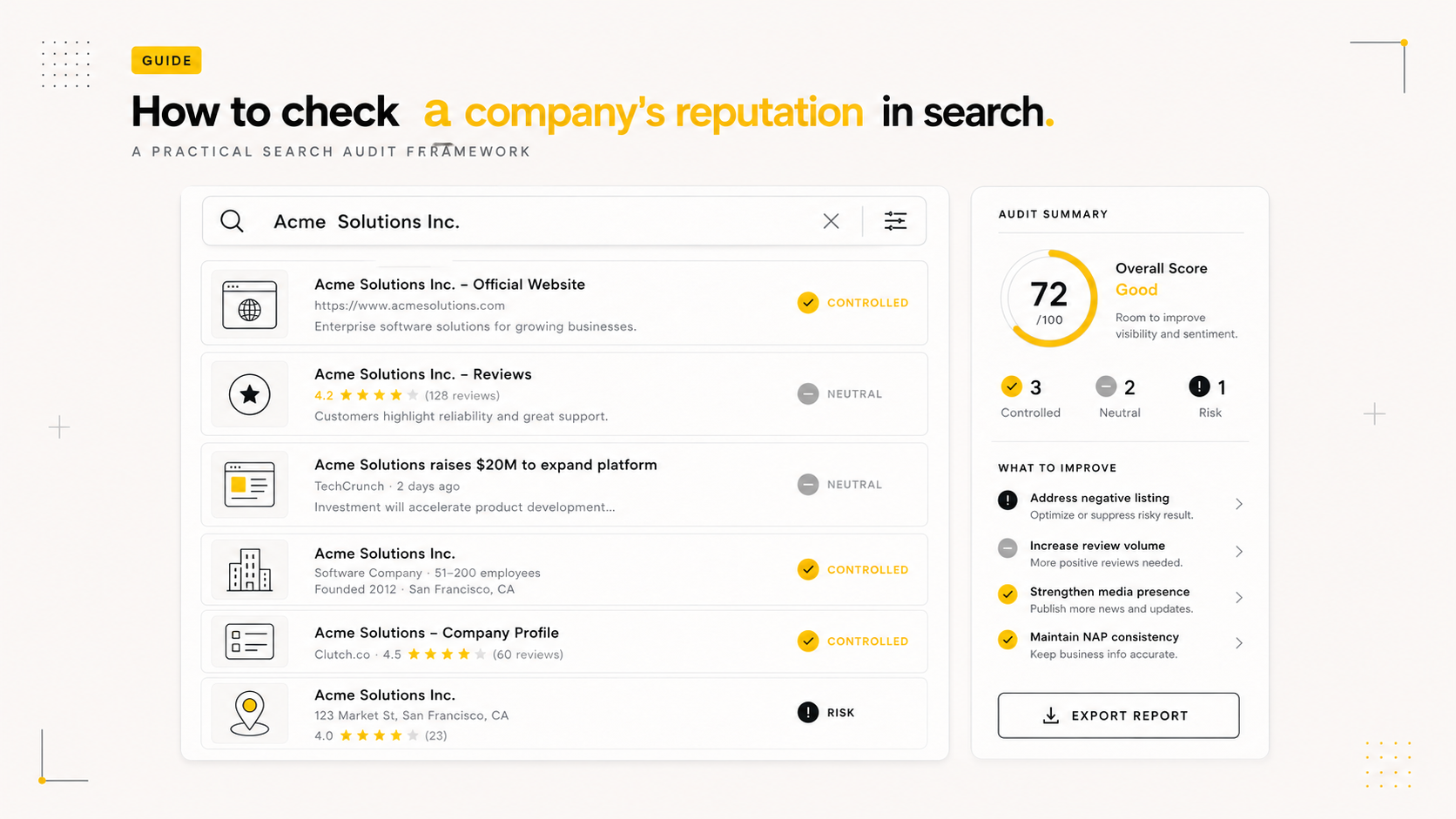
8. Conduct a SERM Audit
A useful audit includes:
- branded and reputation queries;
- Google and Yandex top 10;
- selected positions 11–20;
- negative URL positions;
- source and sentiment analysis;
- query coverage;
- owned and credible independent sources;
- copies and related publications;
- urgent, medium-term and long-term priorities.
The audit prevents the team from acting blindly.
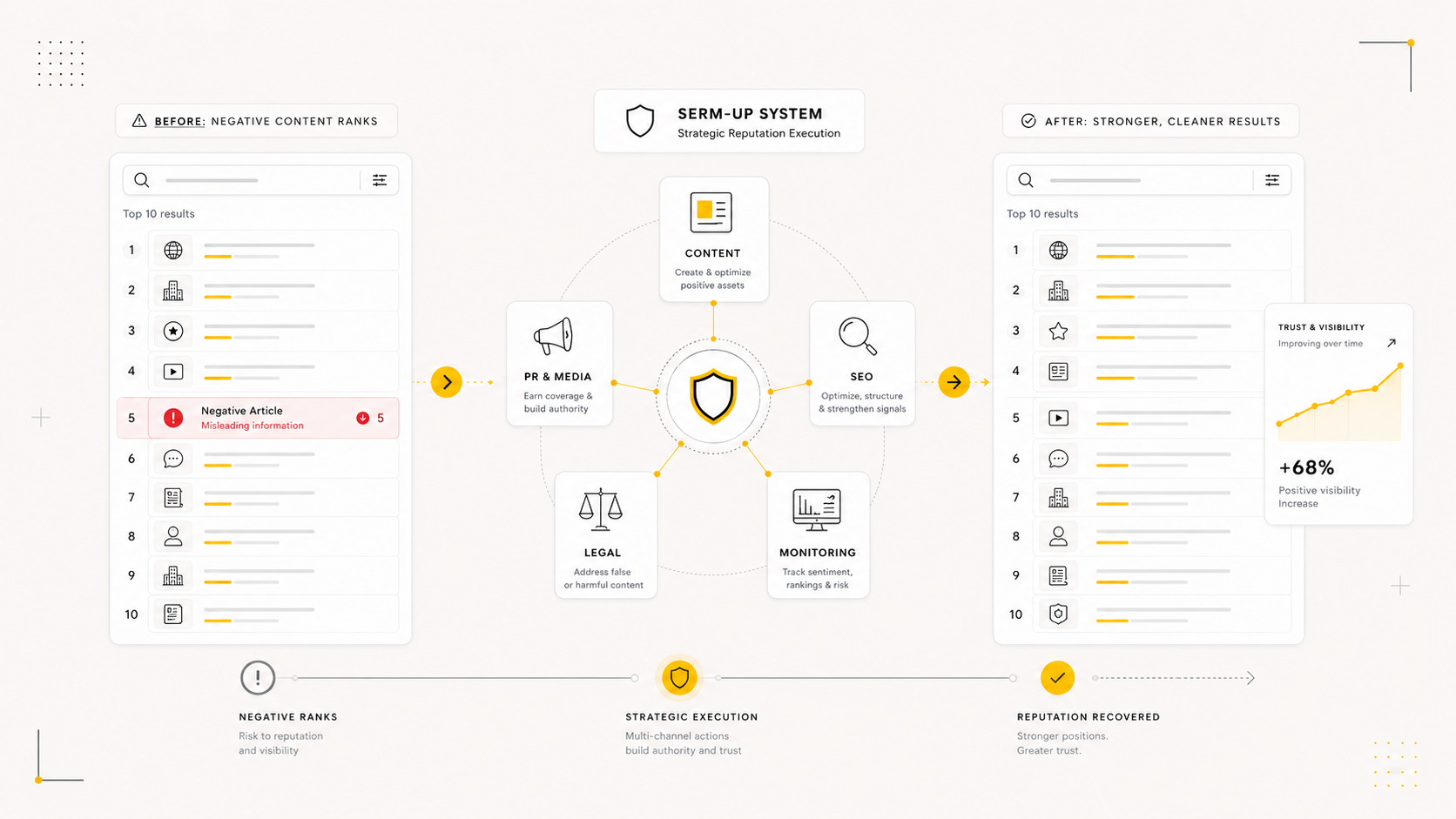
9. Choose the Workstreams
The plan may include:
Publisher or Platform Work
Correction, moderation or removal requests supported by evidence.
Public Communication
A factual response, clarification or prepared answer to stakeholder questions.
Controlled Source Development
Official pages, biographies, company profiles, case studies and expert content.
Search Result Suppression
Development and SEO support of credible sources for the priority queries.
Legal Review
Separate professional advice when formal claims, rights or evidence preservation are involved.
Monitoring
Tracking positions, new copies and related mentions.
10. Define Realistic Metrics
Track:
- the URL position;
- the number of queries it affects;
- the visibility of credible sources;
- correction or moderation status;
- indexation of new materials;
- new copies;
- stability of changes.
Do not define success as “the internet becomes positive”.
What Not to Do
Avoid:
- fake positive reviews;
- mass low-quality articles;
- hidden text;
- false complaints;
- public threats;
- unverified accusations;
- guaranteed ranking offers;
- creating fictional experts or achievements.
When to Escalate Quickly
Immediate professional assessment is advisable when:
- the result appears before a transaction or tender;
- it affects an executive appointment;
- it contains personal or confidential data;
- several major publications repeat the same claim;
- the company expects media attention;
- the result suddenly rises across several queries.
Summary
When negative content enters the top 10, the correct first move is diagnosis.
Confirm visibility, read the full material, preserve evidence, assess the decision impact and select the appropriate search, communications, platform or legal workstreams.