Yandex may be an important source of reputation information for executives, business owners, experts and other professionals working in Russia.
A personal reputation check should look beyond one exact name query. The objective is to understand the wider search picture, the identities that Yandex connects to the person and the sources that influence professional trust.
Step 1. Prepare Name Variations
Record:
- full first name and surname;
- name with patronymic if publicly used;
- common shortened name;
- alternative transliterations;
- former surname where relevant and appropriate;
- name plus company;
- name plus role;
- name plus city;
- name plus project.
A common name requires more identifying context.
Step 2. Add Professional Queries
Examples include:
- name plus company;
- name plus CEO;
- name plus founder;
- name plus expert;
- name plus interview;
- name plus biography;
- name plus reviews;
- name plus project.
Use terms that reflect how clients, employers, partners or journalists may search.
Step 3. Use Sensitive Queries Carefully
For an internal audit, you may check combinations connected to:
- complaints;
- conflict;
- court;
- fraud or scam wording;
- dismissal;
- bankruptcy;
- investigation;
- controversy.
Do not publish or repeat unverified allegations. Sensitive queries are used to understand search visibility, not to confirm that a claim is true.
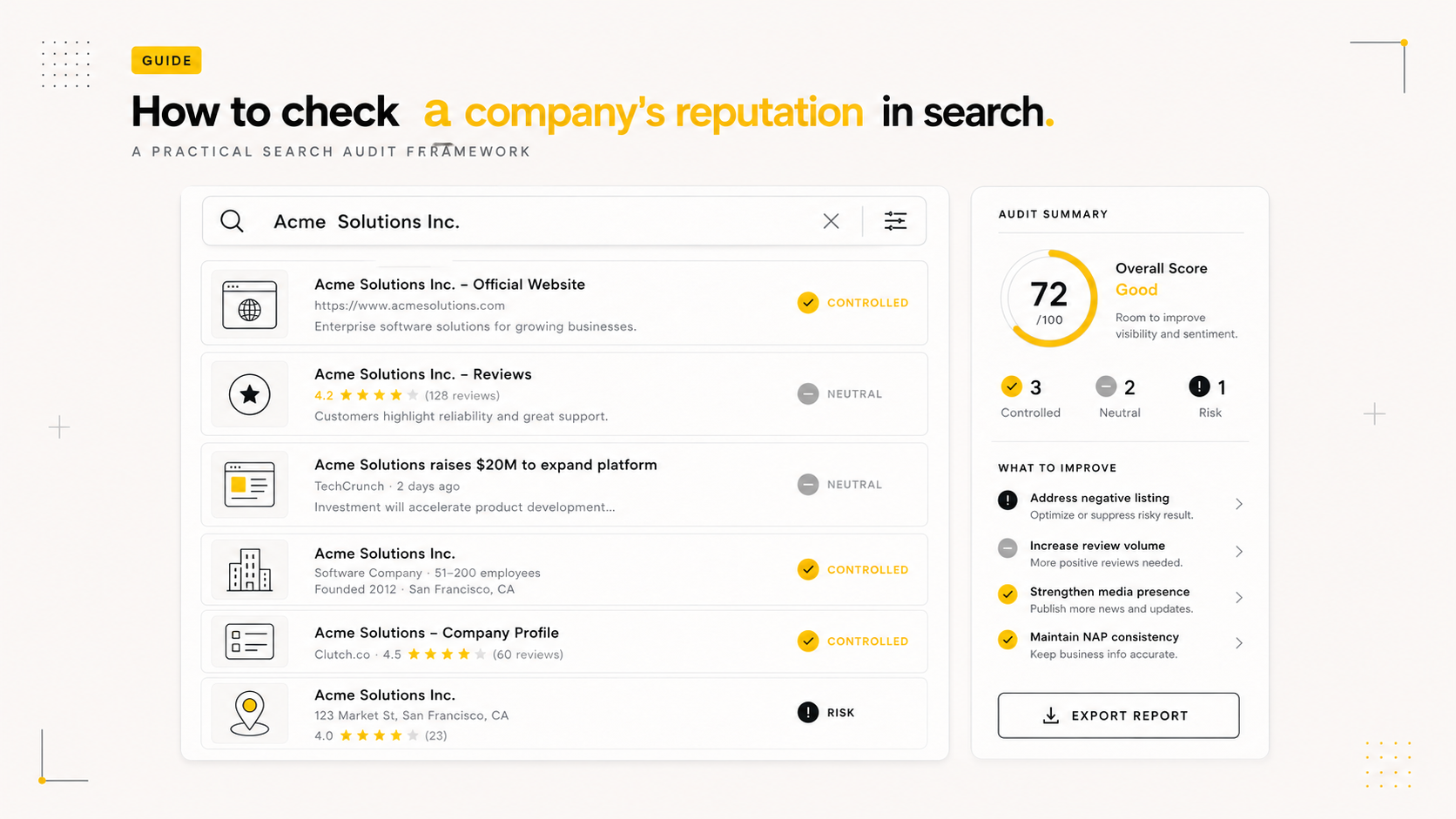
Step 4. Record the Top Results
For each query, record:
- position;
- URL;
- page title;
- source type;
- date;
- sentiment;
- relevance;
- whether the page refers to the correct person;
- whether the information is current;
- whether the source is controlled.
Check the top 10 and selected results in positions 11–20.
Step 5. Review Identity Accuracy
Personal search results often contain errors because Yandex may connect people with similar names.
Check:
- photograph;
- company;
- role;
- city;
- dates;
- education;
- projects;
- biography;
- related people.
An irrelevant result should be marked separately from a genuine reputation issue.
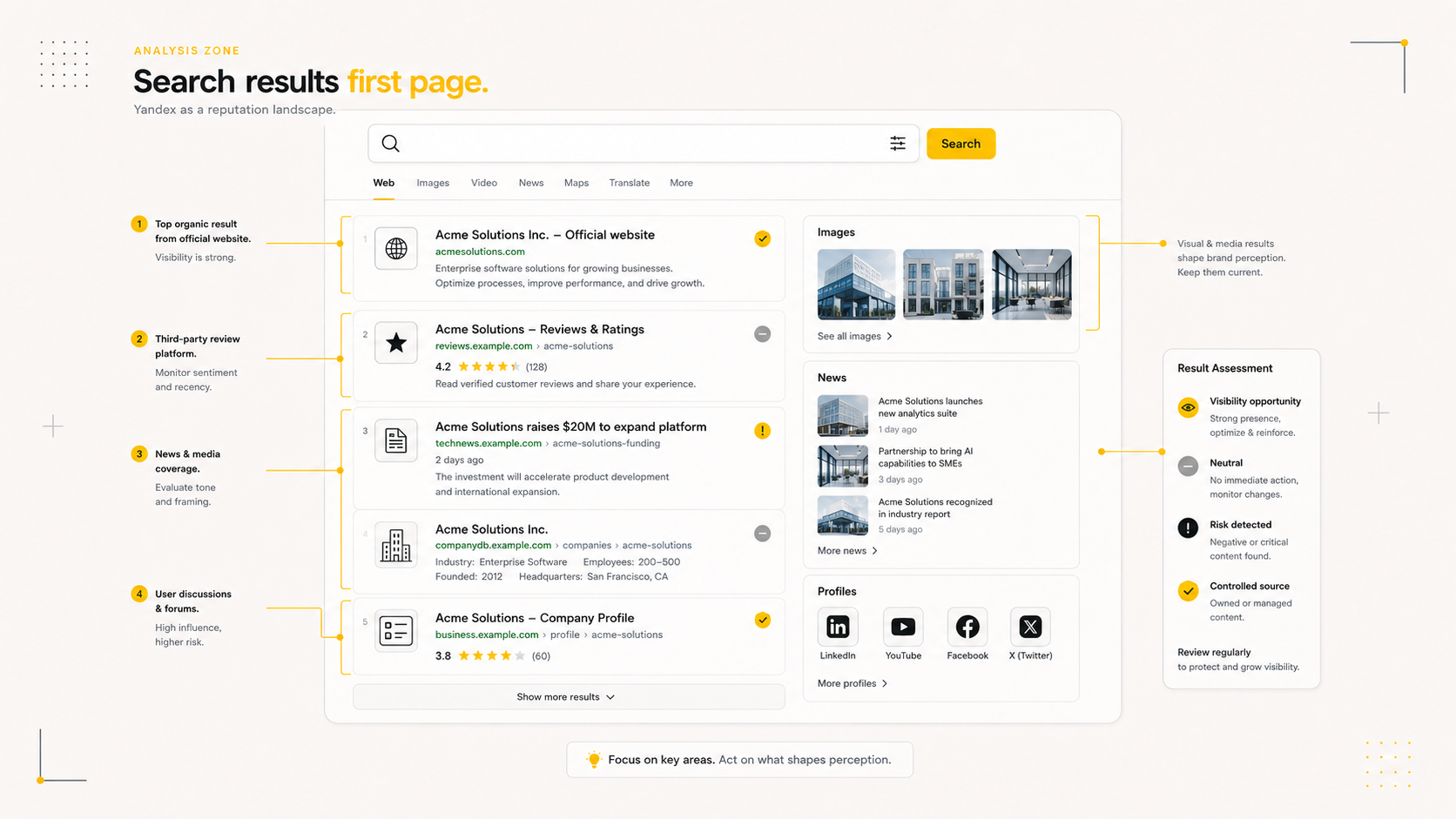
Step 6. Analyse Source Types
Common sources include:
- company leadership pages;
- media articles;
- interviews;
- professional profiles;
- conference speaker pages;
- directories;
- court or public records;
- social profiles;
- reviews;
- forums;
- copied publications.
Step 7. Look at the Search Picture, Not Only the Negative Result
A personal reputation problem may be caused by a lack of current credible information rather than a large amount of negative content.
Ask:
- Is there an accurate current biography?
- Does the company page explain the person's role?
- Are real projects and expertise visible?
- Are old roles still dominant?
- Does one article define the entire first page?
- Are there several conflicting biographies?
- Are professional profiles complete?
Step 8. Check Associated Company Results
Search the company and person together.
A negative company review may affect the executive, while a personal publication may influence the company. The two reputation environments often require a coordinated assessment.
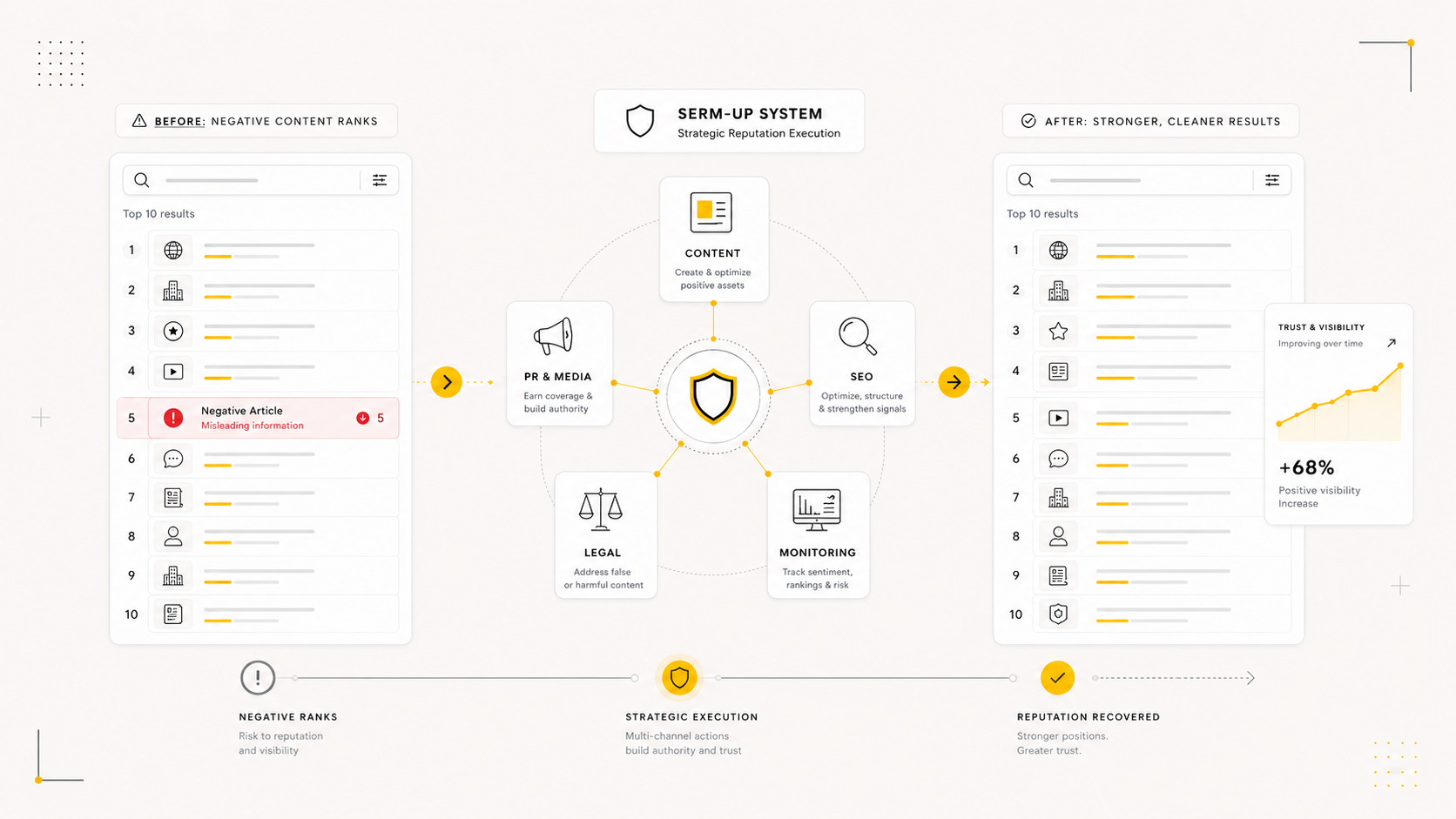
Step 9. Decide What Requires Action
Possible next steps:
- no action and monitoring;
- correcting a biography;
- updating a company leadership page;
- improving a professional profile;
- preparing current expert materials;
- assessing a publisher request;
- preparing a factual public response;
- search result suppression;
- separate legal advice.
Step 10. Protect Personal Data
Do not collect or publish unnecessary sensitive personal information. Record only what is required to assess the public professional reputation issue.
When Professional Support Is Useful
A professional audit may be appropriate when:
- an article is affecting employment or business opportunities;
- the person is preparing for an appointment or media activity;
- several identities are mixed in search;
- the company and executive results are connected;
- a sensitive dispute requires confidentiality;
- the first page contains little accurate professional information.